
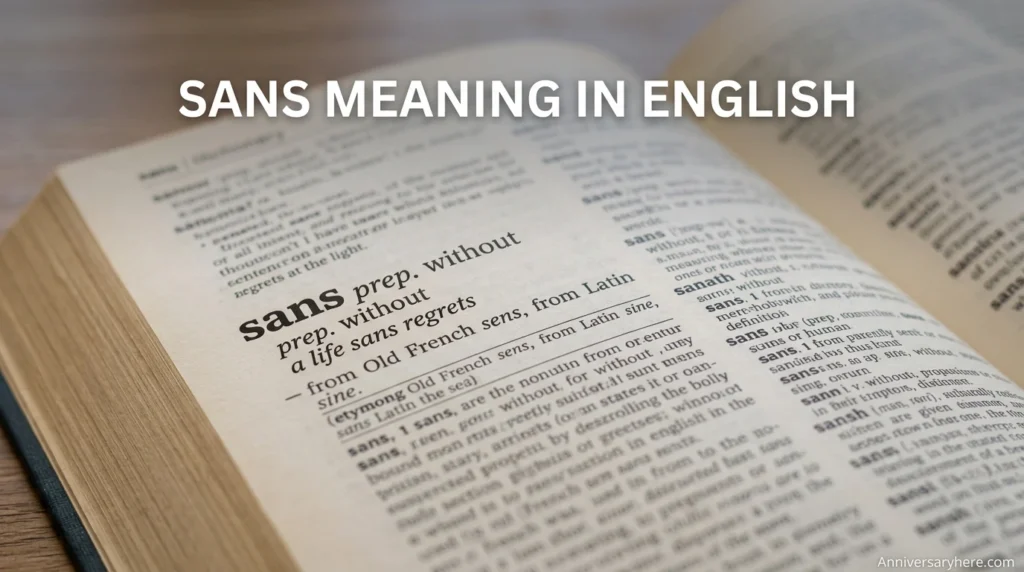
In today’s fast-moving digital world, people often come across short, unusual words like “sans” and wonder what they actually mean. Many search for “sans meaning in English” because they’ve seen it in texts, social media captions, or even memes.
Understanding such words is important because modern communication is filled with slang, borrowed terms, and shorthand expressions that can easily confuse beginners.
Whether you saw “sans” in a message, on TikTok, or in a stylish Instagram caption, you’re not alone in being curious. This guide will break everything down in simple, clear language so anyone can understand it.
By the end, you’ll not only know the meaning of “sans,” but also how to use it naturally in conversations and respond confidently when others use it online.
What Is the Sans Meaning in English?
The sans meaning in English is very simple:
👉 “Sans” means “without.”
It comes from the French language, but it is widely used in English, especially in writing, captions, and stylish expressions.
Quick Definition:
- Sans = Without something
- Example: Coffee sans sugar → Coffee without sugar
Even though it sounds fancy, it’s actually easy to understand and use.
Full Form and Short Meaning of Sans
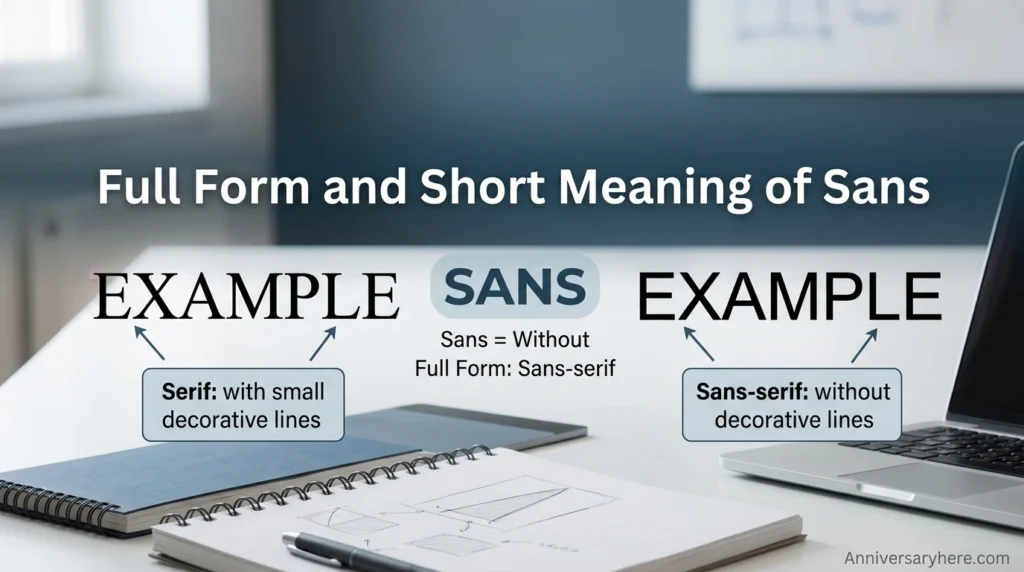
Unlike many internet slang terms, “sans” does not have a full form.
Key Points:
- ❌ No full form (not an abbreviation)
- ✅ Borrowed word from French
- ✅ Short meaning: without
So when people search for the sans meaning in English slang, they are usually just looking for its simple meaning: without something.
Origin and Rise in Popularity of Sans
The word “sans” comes from the French language, where it literally means “without.” It entered English many years ago and has been used in literature and formal writing.
Why is it popular now?
- 📱 Social media loves short and stylish words
- ✨ It sounds more aesthetic than “without”
- 🎯 Common in captions and bios
- 🧠 Used to sound smart or minimal
For example:
- “Living life sans drama”
- “No stress, just vibes sans negativity”
Because of this, the sans meaning in English has become more visible in modern digital culture.
Sans Meaning in Texting and Online Chat
In texting, “sans” is used to replace the word “without” in a more stylish or cool way.
Examples in Chat:
- “I’m going out sans you 😅”
- “Pizza sans cheese? No thanks!”
- “Life feels empty sans music”
Why people use it:
- Shorter than “without”
- Looks aesthetic
- Feels trendy
So, the sans slang meaning in chat is still the same: without something.
How Sans Is Used in Real Conversations
Here are some natural examples to help you understand better:
Casual Use:
- “I prefer my tea sans sugar.”
- “He showed up sans invitation.”
Friendly Chat:
- “Movie night sans snacks? Impossible!”
- “Going on a trip sans phone feels weird.”
Stylish Caption:
- “Smiling sans worries ✨”
- “Happiness sans limits 💫”
These examples show how flexible and simple the word is.
Sans Meaning on WhatsApp
On WhatsApp, “sans” is used in casual chats between friends.
Common Usage:
- “I went to the party sans you 😭”
- “Dinner tonight, but sans junk food”
Tone:
- Friendly
- Slightly stylish
- Sometimes humorous
It doesn’t change meaning—it still means without.
Sans Meaning on Instagram
Instagram is where “sans” shines the most.
Why it’s popular:
- Aesthetic captions
- Minimalist vibes
- Trendy expressions
Examples:
- “Living life sans regrets 💫”
- “Coffee vibes sans Monday stress ☕”
- “Beauty sans filters ✨”
On Instagram, using “sans” makes captions look more elegant and creative.
Sans Meaning on TikTok
On TikTok, “sans” appears in captions, comments, and short text overlays.
Examples:
- “POV: You go out sans your bestie 😭”
- “Me trying life sans caffeine ☕❌”
Style:
- Relatable
- Funny
- Trend-driven
The meaning on TikTok remains the same but is often used in humorous or emotional contexts.
Sans Meaning on Snapchat
On Snapchat, “sans” is used in quick messages or stories.
Examples:
- “Chilling sans homework 😎”
- “Late night vibes sans sleep 😴”
Usage Style:
- Casual
- Quick
- Light-hearted
Again, it simply means without.
What Sans Does NOT Mean (Common Confusions)
Many people misunderstand the sans meaning in English, especially when mixing it with internet slang.
Common Mistakes:
❌ Thinking “sans” is an acronym ❌ Confusing it with other slang like “WYLL” ❌ Assuming it has multiple hidden meanings
Clarification:
- “Sans” = only means without
- It is not slang with multiple meanings
- It is not related to “WYLL” or other abbreviations
Sans vs Other Meanings (Important Distinction)
Sometimes “Sans” may appear in different contexts:
1. General English Word:
- Means without
- Example: Soup sans salt
2. Pop Culture Reference:
- A character named Sans in a video game (different meaning entirely)
👉 Important: When searching sans meaning in English, most people are referring to the word meaning without, not anything else.
Similar Slang Terms and Alternatives
If you don’t want to use “sans,” here are some alternatives:
Simple Alternatives:
- Without
- No
- Minus
Slang or Casual Options:
- “No cap, life without stress hits different”
- “Minus the drama, I’m good”
Stylish Alternatives:
- “Free from”
- “Lacking”
How to Reply When Someone Uses Sans
If someone uses “sans” in a message, your reply depends on the context.
Polite Responses:
- “Got it 😊”
- “Makes sense!”
- “Okay, noted.”
Friendly Responses:
- “Same here!”
- “Haha, true!”
- “I agree!”
Flirty Responses:
- “Sans me? That’s not allowed 😉”
- “You sure you can manage sans me? 😏”
Boundary-Respecting Responses:
- “No worries, enjoy your time!”
- “That’s totally fine 👍”
Understanding the sans meaning in English helps you reply naturally without confusion.
Is Sans Still Popular? (Trends & Gen-Z Usage)
Yes, “sans” is still used, but it’s not as trendy as some newer slang words.
Current Trend Status:
- ✅ Still used in captions
- ✅ Popular in aesthetic posts
- ⚠️ Less common in fast slang chats
Gen-Z Usage:
- Used more for style than slang
- Common in creative writing
- Seen in minimalist content
So while it’s not viral slang, it remains relevant and stylish.
Why People Prefer Using Sans
Here are a few reasons why people love using “sans”:
- ✨ Sounds classy and unique
- 🧠 Makes writing look smarter
- 📱 Perfect for social media captions
- 🎯 Short and easy to use
Because of this, the sans meaning in English slang continues to stay useful in modern communication.
FAQs
What does sans mean in English?
“Sans” means without. It is borrowed from French and used in English for a stylish tone.
Is sans a slang word?
No, it’s not slang. It’s a real word, but often used in a trendy or aesthetic way online.
What is the full form of sans?
“Sans” has no full form. It is not an abbreviation.
How do you use sans in a sentence?
Example: “I like my coffee sans sugar.” (without sugar)
What does sans mean on TikTok?
On TikTok, “sans” still means without, but it is often used in funny or relatable captions.
Is sans still popular in 2026?
Yes, especially in captions and aesthetic content, though not as viral as newer slang.
Conclusion
Understanding the sans meaning in English is simple yet very useful in today’s digital world. The word “sans” means without, and it’s commonly used in texting, captions, and online conversations to sound more stylish and expressive.
Whether you see it on WhatsApp, Instagram, TikTok, or Snapchat, the meaning stays the same. It’s not an abbreviation, doesn’t have a full form, and shouldn’t be confused with other slang terms.
Now that you know how to use it and how to respond when someone else uses it, you can confidently include “sans” in your own conversations. Keep it simple, keep it stylish—and enjoy using modern language like a pro.